


Mass Termination
Terminating flat cable is with a complete set of conductors as a unit, which is more effective to work with a single conductor at the same time.
Reliability
The simplicity of flat cable with its parallel conductor geometry eliminates many of the common sources of wiring error and malfunction. Registration of the conductors is one-to-one with the terminating connector or board making proper contact assignment automatically.
Space and Weight reduction
The use of flat cables often eliminates the weight and bulk of most traditional wires. Such as excess insulation materials, fillers and tape are not necessary. The flat cable structure is such a powerful machine, it does not need the strength of a large conductor. Therefore, the cross-section of copper can be reduced to a size that can carry current load or meet voltage drop requirements.
Flexibility
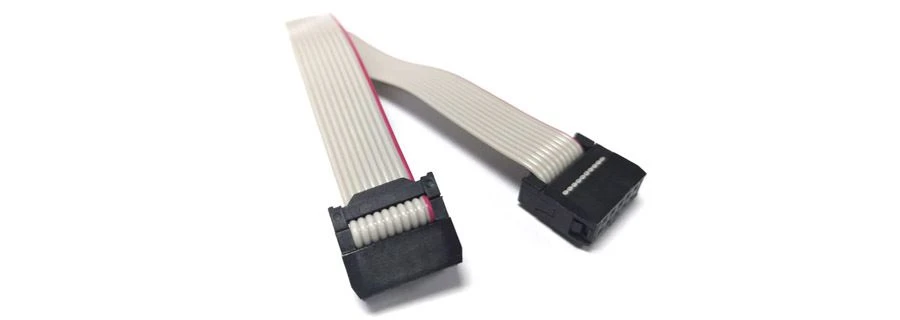
Flat cable has extremely strong flexibility when bent on its thin cross-section (vertical plane). This flexibility is used in applications that require continuous or high bending, such as drawers, doors, swivel arms, etc. But it does not allow lateral bending, so it may only be used in direct flight applications.
Greater Strength
Strength is enhanced by the fact that all conductors and insulation equally share tensile loads.
Consistent Electrical characteristics
Since the spacing of the conductors is fixed and the geometry of the cable is constant, its electrical characteristics, such as impedance, capacitance, inductance, time delay, crosstalk, and attenuation, are consistent.