


Flat cable refers to a flat cable opposite to a round or circular. Usually flat cables can contain multiple conductors, all of which are on the same level. The flat cable can also consist of only one wire. The metal conductor itself may also have a flat or elongated rectangular shape. If the cross section is checked, the difference between the cross section shapes will be obvious.
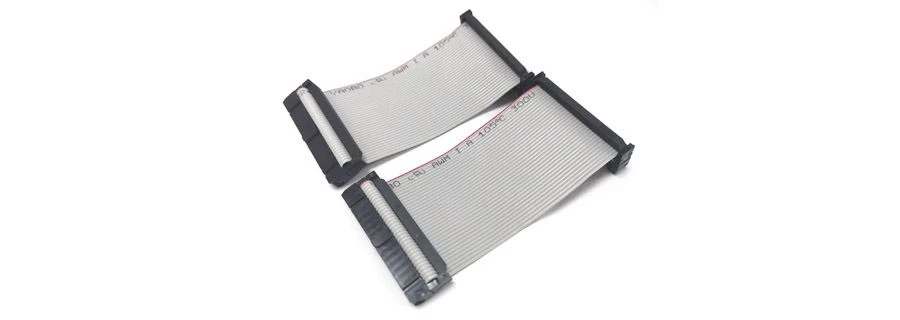
Flat cables are conducive to their application in modern electronics or systems, which are often limited to tight flat openings or running. A flat cable can be placed well without taking up too much three-dimensional space, and is more limited to quasi-two-dimensional space. A ribbon cable is an example of a flat cable.
Flat cables are also subject to certain restrictions in the bending direction. This can be beneficial and problematic because it limits the ability to route the cable if a tight bend is required in a specific direction. However, when they are bent, they tend to bend more easily in the direction of the entire cable. By conforming to the natural bending and flow of the cable, the life and life of the cable can be maintained and extended.