

Industrial Wiring Harness
High quality industrial wiring harness supplier
Industrial wire harnesses need to withstand the high-quality requirements of rapid acceleration, deceleration and tension. Compression and torsional stresses, and millions of bending cycles. At the same time, industrial wiring harnesses usually have larger currents and higher requirements on wires.
Our industrial wire harnesses have reached the highest quality standards and can be designed and manufactured according to customer requirements.
At the same time, we insist on choosing the world's best connector companies as suppliers, such as TE, Ampheno, MOLEX, ITTCannon, JST, KET, etc., to better provide customers with high-quality industrial cable assemblies.
We offer a variety of industrial wire harnesses, including multi-core wire harnesses, shielded wire harnesses, flat wire harnesses, ribbon wire harnesses, coaxial wire harnesses, etc. All of our wires, cables and accessories are UL, CE, VDE or other safety-approved.
Discover additional details about our industrial cable components.


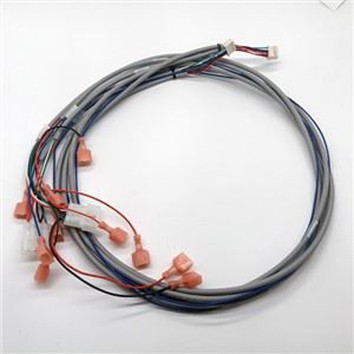
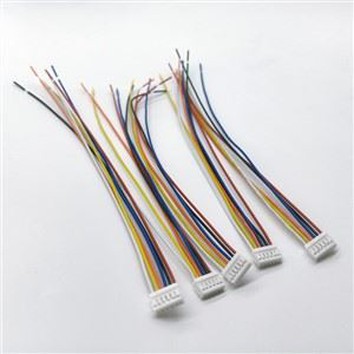

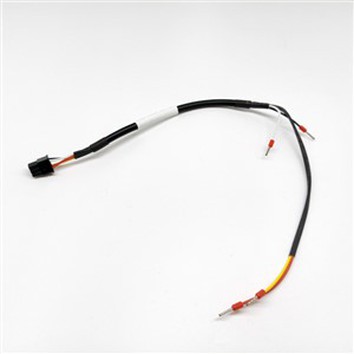
Industrial Wiring Harnesses
Are electrical wiring systems used in industrial equipment and machinery. They ensure dependable electrical connections and efficient signal transmission by integrating multiple wires, cables, and connectors. These wire harnesses are classified based on their application areas such as industrial automation, machinery and equipment, automotive manufacturing, aerospace and energy industries. This classification also takes into account the number and type of wires contained in the harness, which can range from a few to hundreds of wires of varying sizes, colors and uses, including low-voltage power cables, signal cables, sensor cables and communications cables. The type of connector used in the wiring harness is another important aspect of classification, common types include plugs, sockets, circular connectors, and rectangular connectors. In addition, the adaptability of industrial wiring harnesses to different working environments must also be considered, as various industrial applications may have specific requirements, such as high or low temperatures, humidity, corrosion or vibration environments. Therefore, these belts need to have the proper protection and durability to withstand such conditions.


Customize Your Industrial Wiring Harnesses
ECOCABLES provides a full range of industrial wire harness customization services. We understand that different industrial applications have specific requirements for wire harnesses, so our professional team is committed to working closely with customers to design and manufacture wire harness solutions that meet your unique needs. Whether it's special dimensions, specific material selections, or complex wiring requirements, we can provide customization to meet your needs. Our customization process includes detailed requirements analysis, professional design planning, strict quality control and comprehensive testing to ensure the performance and quality of the final product. By choosing our customized services, you will receive an efficient, reliable and industry-standard industrial wiring harness solution.
Industrial Wiring Harness Types
According to different functional requirements, industrial wiring harnesses can be divided into power wiring harnesses, signal wiring harnesses, data wiring harnesses, control wiring harnesses, robot wiring harnesses, etc.
Power wiring harness
mainly used to transmit power and provide necessary energy for equipment. Such as switch power cord, computer power cord, etc.
Signal harness
used to transmit control signals, usually used to connect circuit boards to control electrical signals. It is widely used in financial equipment, security equipment, new energy vehicles, medical equipment and other fields.
Data harness
used for uploading and downloading data signals, such as USB data cables, MINI MICRO, Samsung, Apple data cables, etc.
Control wire harness
used to connect the control system and the actuator and transmit control instructions. They are extremely important in automated control systems.
Robot wiring harness
specially designed for industrial robots, including body wiring and end-load tool wiring. The main body wiring includes motor power line, encoder line, reserved air pipe and IO line; the terminal tool wiring includes air source line, bus power line, bus signal line and IO line. The design of the robot wiring harness needs to consider the robot's range of motion, cable life, overall appearance, installation and maintenance.
Industrial Wiring Harnesses Application Fields
According to different application scenarios, industrial wiring harnesses can be divided into factory automation wiring harnesses, ship wiring harnesses, mining wiring harnesses, aircraft wiring harnesses, etc.
We provide reliable interconnect solutions for applications such as automation equipment, semiconductor equipment, airport construction, terminal communications, construction machinery, construction cranes, large machine tools and industrial robotic arms, industrial robots, etc.
Factory automation wire harness
used to connect automation equipment and systems to improve production efficiency and product quality. They often need to be able to withstand mechanical vibrations, temperature changes and other potential environmental effects found in factory environments. Automated factories can significantly reduce workloads by standardizing wire harness designs.
Marine wiring harnesses
require high levels of safety and reliability to withstand the harsh conditions of the marine environment, such as salt spray, humidity and temperature changes. They usually have waterproof, dustproof, fireproof and other functions to ensure the safe operation of ships.
Mining wiring harness
used in mining industries such as coal mining to connect mining machinery, transportation equipment, and lighting and communication systems. Due to the harsh mine environment, mining wiring harnesses must have a high degree of safety performance, including flame retardancy and wear resistance. They are usually made of insulated wire and carry safety mark certification.
Aircraft wiring harness
A key component in the aviation industry, used to connect various electronic devices and systems on aircraft. Aircraft wiring harnesses need to be lightweight while maintaining a high degree of reliability and durability to withstand the stress, vibration and temperature changes of flight. The total length of aircraft wiring harnesses can reach tens of kilometers and contain tens of thousands of wires and thousands of connectors.
Industrial wiring harnesses Frequently Asked Questions
What materials are industrial wiring harnesses usually made of?
+
-
• Wire: Typically a copper or aluminum wire with insulation used to transmit power and signals.
• Connectors: including terminals and plug-in plastic shells, etc., used to connect different parts of the wiring harness or to connect to equipment interfaces.
• Sleeving: Such as corrugated pipe or PVC pipe, used to protect wires from physical damage and environmental influences.
• Use auxiliary materials such as tape, various types of sheathing, and heat shrink tubing to further protect the wiring harness and provide additional mechanical or environmental protection.
The selection and combination of these materials depends on the specific environment and performance requirements of the seat belt application. For example, some harnesses may require additional water or fire resistance, while others may require greater heat or chemical resistance.
What are the main factors to consider when designing industrial wiring harnesses?
+
-
Purpose and function: Specifies the specific tasks the wire harness needs to perform, such as transmitting power or signals, and whether it needs to resist vibration or electromagnetic interference.
Wire selection: Select appropriate wire specifications based on electrical requirements, including wire specifications, current carrying capacity, conduction current, etc.
Environmental conditions: Consider the environment to which the harness will be exposed, such as heat, moisture, or chemicals, and select appropriate materials and protection.
Mechanical properties: Ensure that the wire harness can withstand mechanical stress, such as bending or twisting, while keeping its electrical properties intact.
Abrasion Resistance: If the harness is subject to rubbing or scratching, it should have good abrasion resistance.
Manufacturing process: Consider the manufacturing process of the wire harness, including steps such as stripping, crimping, assembly, and testing.
Quality Control: Continuity testing, insulation testing, and functional testing are performed to ensure that the harness meets safety standards.
Maintenance and maintenance: The convenience of maintenance and upkeep of the wiring harness should be considered when designing.
Life expectancy: The design life of the wire harness is estimated based on the use environment and maintenance conditions.
Custom Requirements: Depending on specific application requirements, the size, layout, and components of the harness may need to be customized.
What is the manufacturing process of industrial wire harnesses?
+
-
The manufacturing process of industrial wire harnesses is a series of carefully designed, sequenced steps designed to ensure that the quality and performance of the wire harness meet specific industry standards. The following are the basic steps for manufacturing industrial wiring harnesses:
Incoming inspection and storage: First, the raw materials are inspected to ensure that the materials meet production requirements and are properly stored for use.
Cutting: Cut, peel and bundle wires of different specifications according to design drawings and process documents.
Crimping: Connecting wires and terminals together using a crimping machine to ensure the connection is secure and meets technical specifications.
Subassembly: Assemble the crimped semi-finished products with other parts such as sheaths, pipes, rubber parts, etc. into new semi-finished products.
Assembly: Combine a variety of semi-finished products and materials into a complete wire harness, tied with tape or zip ties.
Inspection: Conduct appearance inspection, functional inspection, electrical inspection, etc. to ensure that each finished product meets quality standards.
Packaging: Arrange the qualified wire harnesses neatly, package them, affix the certificate of conformity and serial number, and finally put them into storage.
This process requires precision equipment and experienced engineers to ensure accuracy at every step, resulting in high-quality industrial wire harness products.
How to route industrial wiring harnesses?
+
-
The wiring method of industrial wire harnesses needs to consider many factors to ensure the safety, reliability and efficiency of the wire harness. Here are some key considerations when wiring:
Wire harness classification: Classify and bundle wire harnesses according to the type, frequency, power, etc. of wire transmission.
Grounding requirements: Twisted pairs, multi-strand cables, and shielded cables need to be grounded at both ends or at multiple points.
Avoid heat sources: Wire harnesses should not be placed near heating components.
Protective measures: When the wiring harness passes through sharp angles or places where the wires may be scratched, protection should be provided.
Fixing method: Use clamps, cable ties, hoops, wire troughs, and brackets to fix the wire harness. When sealing the cavity, be sure to use perforated rubber pieces to protect the cables.
Bending radius: Choose an appropriate bending radius, usually 8-10 times the outer diameter of the cable as the bending radius of the drag chain.
Wiring of moving parts: The cable of the drag chain should be a mobile cable, and ensure that the distance between the cable moving point and the end of the drag chain is 10-30 times the outer diameter of the cable. Prevent twisting: When wiring without twisting the wires, the side wire angle should not exceed 5°.
Cable clearance: When implementing horizontal wiring in a drag chain, sufficient clearance must be ensured.
The clearance between cables should be at least 10% of the outer diameter of the cable. These guidelines help ensure the performance and safety of industrial wiring harnesses during wiring, while also helping to increase the longevity and ease of maintenance of the wiring harness.
How to identify industrial wiring harness work?
-
Visual inspection: Check the wiring harness for obvious damage, such as broken wires, fraying, or corrosion.
Electrical Testing: Conduct continuity and insulation tests to ensure there are no breaks or shorts in each wire in the harness.
Functional testing: Verifies that components such as relays and switches in the wiring harness work as expected.
Image Inspection: Perform an image inspection of the wiring harness with the fuse box to determine if the safety plug and relay plug are in the correct position.
Torque detection: Check whether the torque of the bolts in the fuse box meets the regulations.
How to choose the right industrial wiring harness?
-
Wire harness standards: Ensure that the wire harness meets the standards of the industry and region where it is used, such as EU VDE certification, US UL certification, etc.
Terminals and wires: Select the appropriate terminal model and wire model specifications based on the device’s wiring method, current carrying capacity, wire diameter, and application scenarios.
Matching equipment interface: The design of the wiring harness should match the interface on the equipment board to ensure the reliability of the connection.
Environmental adaptability: Choose a wire harness type that can adapt to the working environment conditions of the equipment, such as high temperature resistance, high pressure resistance, flexibility, wear resistance, etc.
Quality and safety: Pay attention to the quality and safety of wires and choose products with reliable quality and safety standards.
What should we pay attention to when transporting and storing industrial wiring harnesses?
+
-
Moisture and dust-proof: Ensure that the wiring harness is not affected by moisture and dust, preventing corrosion and damage.
Avoid mechanical damage: During transportation, the wire harness should be protected from being squeezed, bumped, or dropped, especially at low temperatures, otherwise it may cause the insulation or sheath to break.
Proper Packaging: Use appropriate packaging materials, such as pearl cotton or bubble bags, to protect fragile connectors.
Clear identification: Each wire harness should have a fixed label or product nameplate in a visible location, including product name, model, manufacturer, production date or batch number.
Storage environment: The storage warehouse should have tight doors, windows and ventilation channels, which are dust-proof, moisture-proof, and protected from sun and rain. The relative humidity should not exceed 70%, and the temperature should be controlled within the range of 10°C to 30°C.
Avoid chemical corrosion: Do not come into contact with corrosive substances such as acids, alkali and mineral oil, and should be stored in isolation.
Storage period: The storage period of cables is usually limited by the date of manufacture, which generally does not exceed one and a half years, and the longest does not exceed two years.
What are the common faults of industrial wiring harnesses?
-
Poor contact: Due to unreasonable design, incorrect material selection, abnormal processing dimensions, etc., poor contact of the metal conductors inside the terminal may occur.
Poor insulation: Due to reasons such as steel residue on the floor or inside, floor dust, flux or aging of insulating materials, insulators will be contaminated by moisture, resulting in short circuits, leakage, breakdown, low insulation resistance, and poor insulation.
Poor fixation: Insulators not only insulate, but often also provide precise neutralizing protection for extended contact. Poor fixation can lead to contact reliability issues or even product disintegration.
Short circuit fault: Due to external extrusion and impact, the cables inside the wiring harness are damaged, resulting in an intermediate short circuit fault.
Iron: If the power cord is short-circuited, there is nothing missing between the cable sheath and the power cord terminal, but the copper core cable is short-circuited to the power cord terminal.
Burnout: Due to human factors such as overload, short-circuit fault, unscientific installation position, incorrect wiring, etc., the wiring harness may be burned out.
We're well-known as one of the leading industrial wiring harness manufacturers and suppliers in China. Our factory offers customized industrial wiring harness made in China with competitive price. Welcome to contact us for free sample.
Molex 5264 Industrial Wiring Harness, Industrial Wiring Harness, 3D Printer Wire Harness