

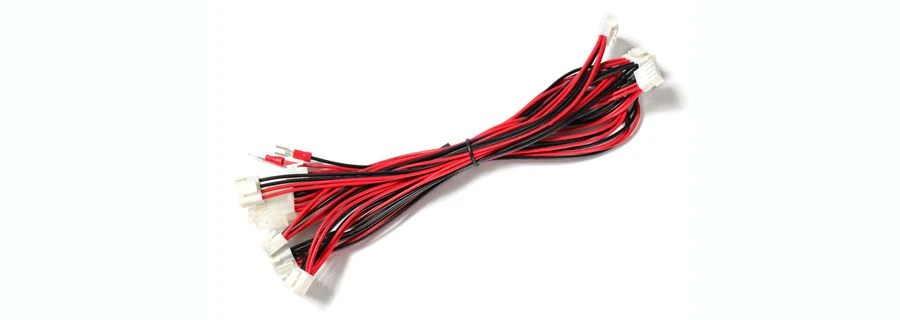
Each harness needs to match the geometric and electrical requirements of the equipment or appliance it uses. Wiring harnesses are usually completely independent of large manufacturing components. This brings a number of benefits, including:
Simple manufacturing processes by creating wiring for drop-in installation
Easy disconnecting and current analysis for troubleshooting, disassembly, and part repair
Simple Installation processes with wire harnesses that include all of a product's wires, cables, and subassemblies with quick connect/disconnects.
Each wire and terminal can be configured to match the exact length, size, and layout of the main product being connected.Wires can also be colored and marked to simplify installation and maintenance.
The manufacturing process begins with design and schematic diagram development.Then there is prototyping.Finally it went into production.The operator assembles the wire harness on a drawn test board, which confirms the exact measured length of the wire harness.The Committee also confirmed that terminal and connector housings designed for application are being used and cable straps and coverings have been added for ease of organization and transportation
Although automation plays an important role in all manufacturing processes, the complexity of the final product means that many of the sub-steps of the assembly process must be done manually.Wiring harness cable assembly is a multifaceted process.The main steps in this process include:
Installation on the wires, terminals, and connectors on the build board
Installation of specialty components such as relays, diodes, and resistors.
Installation of cable ties, tapes, and wraps for internal organization
Wire cutting and crimping for reliable terminal connection points