


LVDS is a differential signaling system. It transmits two different voltages, which are compared at the receiving end of the transmitting end. LVDS uses the voltage difference between two wires to encode information. Compared with the single-ended solution, the differential data used in LVDS is less susceptible to common mode noise. Unlike single-ended transmission, differential transmission uses two wires with opposite current/voltage fluctuations to transmit data.
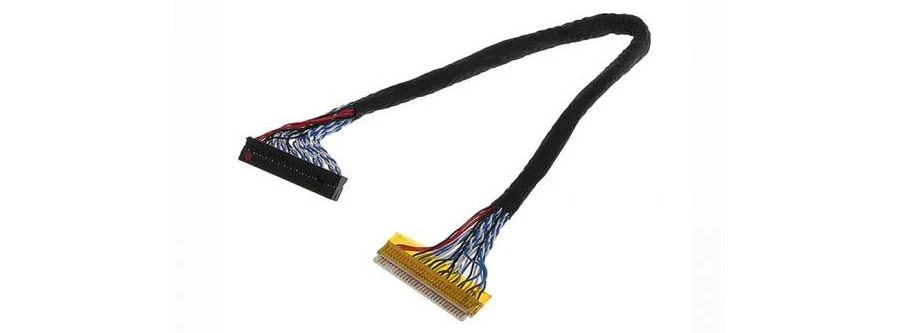
The advantage of the differential method in LVDS is that the noise is usually evenly coupled on the two cables and then rejected by the receiver. The receiver only sees the difference between the two signals. Compared with single-ended signals, differential signals tend to radiate less noise due to the cancellation of the generated magnetic field. If online noise and electromagnetic interference are a problem, shielding the entire cable assembly, and introducing methods such as ferrite beads and leaky wires are several ways to solve this problem. Shielding not only helps to clean up any noise generated by the LVDS cable, it also prevents other electronic components from "talking" to the cable, thereby distorting the image quality and cable function.