

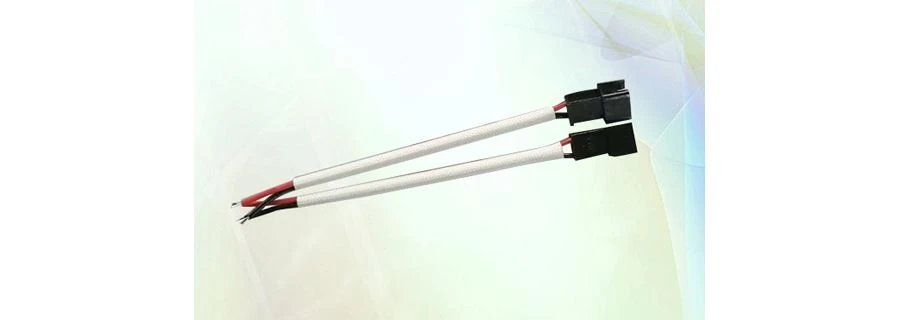
The terminal wire is composed of the terminal crimping terminal connector of the electronic connection wire. The main products purchased in the terminal wire processing plant are divided into three categories, namely: wire, terminal, and connector. Among them, the structure of the connector is becoming more and more diversified, and new structures and fields are constantly appearing. How does the terminal wire processing plant divide the types of connectors?
First, the terminal wire processing plant's classification of connectors, according to the function of internal and external connections of electronic equipment, interconnection can be divided into five levels.
1. The internal connection of the chip package.
2. The connection between IC package pins and PCB, such as printed circuit connectors.
3. The connection between the printed circuit and the wire or the printed board is the board-to-wire connector.
4. The board-to-board connection is the board end connector.
5. The connection between the device and the device, that is, the wire-to-wire connector.
Second, the basic performance of the connector by the terminal wire processing plant can be divided into three categories:
1. Mechanical performance: The main insertion and extraction force is divided into insertion force and extraction force. The requirements of the two are different. From the perspective of use, the insertion force is effective. If the extraction force is too small, it will affect the reliability of contact. , The plug-in force and mechanical life of the connector are related to the plating quality of the structural contact part of the contact and the dimensional accuracy of the contact arrangement.
2. Electrical properties: including contact resistance, insulation resistance and dielectric strength.
①The contact resistance of the connector ranges from several milliohms to tens of milliohms.
②The magnitude of insulation resistance ranges from hundreds of megohms to thousands of megohms.
③The electric strength is the ability to withstand the rated test voltage between the connector contacts or between the contacts and the shell.
Third, environmental performance: including resistance to temperature, humidity, salt spray, vibration and impact.