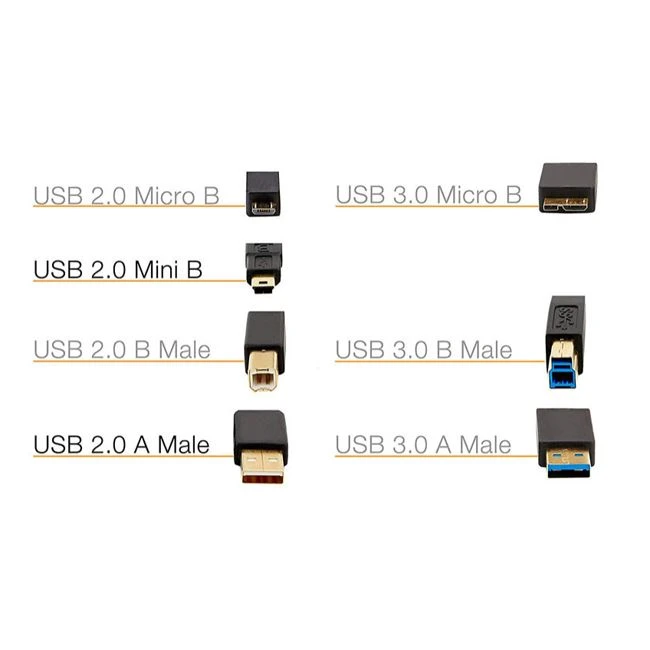
If your life is inseparable from your mobile phone or personal digital assistant (PDA), you will be happy to hear that the micro USB connector will soon make these gadgets more convenient to use. USB is the abbreviation of Universal Serial Bus. It is an external bus or cable. The standard is used to connect peripheral devices such as keyboards to computers. It is an alternative to its universal predecessor, serial and parallel standards. After some time, USB technology has been enhanced and reduced to a smaller size, called mini USB. The micro USB specification is now planned to replace the mini USB connector in many different.
Compared with mini USB, micro USB has many advantages. The most obvious benefit of this new technology is its smaller size. As mobile phones and PDAs become thinner and lighter, consumers often find that the mini USB interface is too large to be practically used. Micro USB will enable manufacturers to push the limits of this trend to more fashionable designs.
In addition to its small size, micro USB is more durable than mini USB connectors. A micro USB features a stainless steel housing that allows more than 10,000 insertion cycles, as well as a latching mechanism to provide higher extraction power without sacrificing USB's easy-to-use synchronization and charging of your portable device.
Another benefit to this new connector type is that the micro USB specification will support the USB OTG supplement, a technology that was invented to meet the need for portable devices to communicate directly with each other without the assistance of a computer. Whether you're traveling on business or meeting friends for a casual lunch, the OTG supplement offers total mobile interconnectivity. It allows you to easily transfer, print, or share your documents, songs, and photos while using low power features that will help preserve battery life.